Cash and valuables ratings are used to define the level of protection a safe offers and are an important factor when selecting the right safe for your needs.
Reputable manufacturers design their safes to withstand rigorous “industry standard attack tests,” which simulate forced entry attempts using a range of tools and methods over a set period of time. Following these independent tests, each safe is assigned a Cash Rating and a Valuables Rating (also referred to as non-cash cover). These ratings indicate the maximum recommended value of contents that can be stored within the safe, as recognised by the insurance industry.
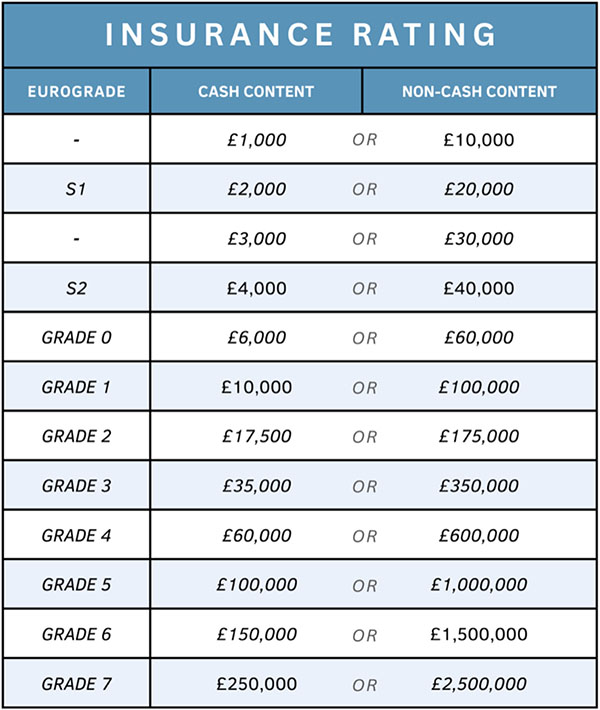
As a general rule, the valuables (non-cash) rating is set at ten times the cash rating. For example, a safe with a £6,000 cash rating would typically offer up to £60,000 of valuables cover. This distinction exists because items such as jewellery and important documents are often considered less attractive or harder to dispose of than cash.
Safes are graded under the Eurograde classification system (e.g. Grade 0, Grade 1, Grade 2, etc.), with each increasing grade representing a higher level of tested security. As the grade increases, safes generally become more robust, heavier in construction, and offer greater resistance to attack, this is often reflected in the price.
It is important to note that insurance companies may specify the minimum cash or valuables rating required for your policy. Selecting a safe that meets or exceeds these requirements ensures that your contents are properly protected and that you remain compliant with your insurance cover.